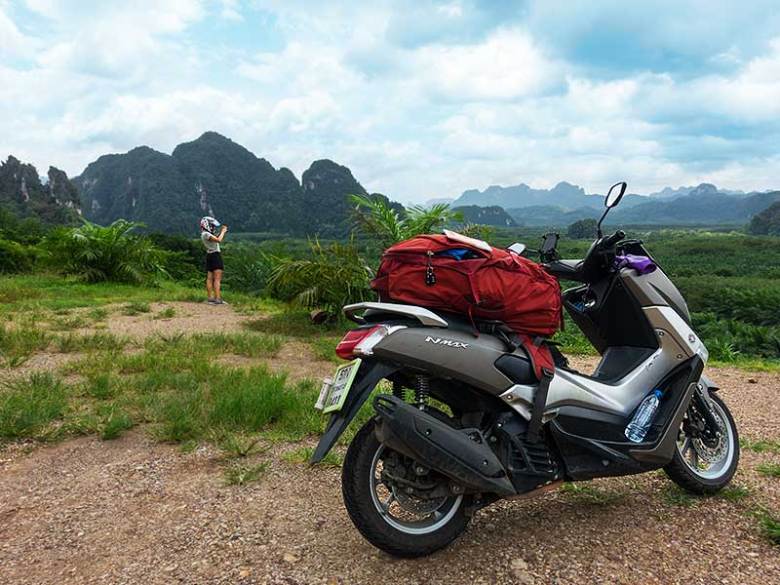

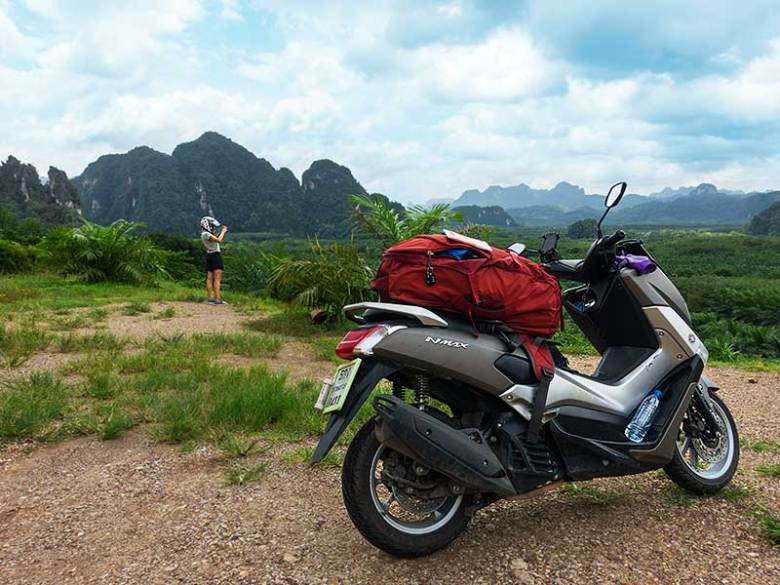
Traveling has always been about movement. Not just crossing borders or ticking destinations off a list, but the act of navigating space on your own terms. In Thailand, this idea becomes very literal. The country is large, diverse, and rhythm-based. Cities breathe differently by the hour, islands change mood by the tide, and entire neighborhoods reveal themselves only if you move slowly enough to notice them. This is where transportation stops being a logistical detail and becomes a defining part of the travel experience.
For decades, tourists in Thailand have relied heavily on taxis, tuk-tuks, tour vans, and ride-hailing apps. These options work, but they frame travel as something that happens between fixed points. You go from hotel to attraction, from attraction to restaurant, from restaurant back to hotel. What happens in between is mostly invisible, filtered through windows or missed entirely. Scooter travel changes that structure completely. It turns the journey itself into the destination.
Scooters are not an exotic choice in Thailand. They are the backbone of everyday life. Office workers commute on them, families use them for grocery runs, delivery drivers rely on them for income, and students treat them as extensions of their independence. When travelers adopt scooters, they are not choosing a novelty. They are stepping into the native flow of the country.
This article explores how scooter rentals reshape the way people travel in Thailand, why they are uniquely suited to both short and long stays, and how modern rental companies like RentLab are professionalizing and modernizing this experience for international travelers. It is not a beginner’s checklist or a promotional piece. It is a structural look at how mobility affects perception, cost, time, and authenticity while traveling.
Thailand as a travel environment is deceptively complex. On the surface, it looks easy. Warm weather, friendly people, good food, and affordable prices create the impression that everything simply works. Underneath that layer, however, the country operates on unwritten rules, micro-timing, and spatial logic that is hard to understand without moving through it directly. Scooters are one of the few transport methods that allow travelers to read this logic in real time.
In cities like Bangkok, Chiang Mai, and Phuket, distances are often short but time is elastic. A three-kilometer trip can take five minutes or forty-five minutes depending on the hour, the street, and the weather. Taxis optimize for main roads. Public transport follows fixed lines. Scooters slip through the cracks. They operate in the negative space of traffic, using side streets, shortcuts, and informal routes that are invisible on most maps. This flexibility gives travelers something rare: predictability.
Predictability is not about knowing exactly what will happen. It is about having control over variables. With a scooter, you decide when to leave, which road to take, and when to stop. You are not negotiating fares, waiting for drivers, or adjusting plans based on someone else’s availability. This autonomy compounds over time. A single scooter ride might save ten minutes. Over a week, it can reclaim hours. Over a month, it changes how you plan your entire stay.
Cost is another fundamental layer. Thailand is affordable by global standards, but transportation costs add up quickly, especially for travelers who move often. Daily taxi use in major tourist areas can rival accommodation costs. Ride-hailing apps introduce surge pricing during peak hours, rain, or festivals. Organized tours bundle transport with experiences, but at the cost of flexibility and authenticity.
Scooter rentals operate on a different economic logic. They offer a flat, predictable cost that scales favorably with time. The longer you rent, the cheaper each day becomes. This makes scooters particularly attractive for slow travelers, digital nomads, and anyone staying longer than a few days. Instead of calculating each trip, transportation becomes a sunk cost. Once paid, movement feels free, even if it technically is not.
This psychological shift matters more than it seems. When movement feels expensive, people restrict it. They skip places, compress schedules, and make conservative choices. When movement feels abundant, exploration expands. You take detours. You follow curiosity. You stop because something looks interesting, not because it was on the plan. Travel becomes experiential rather than transactional.
Scooters also alter the scale at which travelers experience Thailand. Many visitors think in terms of districts or landmarks. Scooter riders think in terms of streets, corners, and sequences. A neighborhood stops being a name on a map and becomes a collection of textures: the café that opens at dawn, the mechanic who fixes bikes with classical music playing, the food stall that appears only at night, the quiet alley that cuts behind a temple.
These details are not accidental. They are the result of being physically present at human speed. Walking is often too slow and geographically limited, especially in hot weather. Cars are too fast and insulated. Scooters hit a balance point where the environment is readable but expansive. You smell food, hear conversations, feel temperature shifts, and still cover meaningful distance.
Safety is often raised as the primary concern when discussing scooter rentals in Thailand. This concern is valid and deserves serious treatment, but it is frequently framed incorrectly. Scooters are not inherently dangerous. Unfamiliarity, poor equipment, and lack of preparation are what create risk. Modern rental companies have recognized this and structured their services accordingly.
This is where the evolution of scooter rental companies becomes important. In the past, rentals were informal. Bikes were old, paperwork was minimal, and expectations were unclear. That environment rewarded experienced riders and punished newcomers. Today, companies like RentLab represent a different model. They approach scooter rentals as a professional service rather than a casual transaction.
Professional scooter rental companies focus on fleet quality, maintenance schedules, transparent pricing, and clear rules. They understand that travelers come from different riding backgrounds and design systems that reduce friction. This includes online booking, documented vehicle condition, identity verification, insurance clarity, and support communication channels. These features do not eliminate risk, but they shift it from chaotic to manageable.
RentLab, as a scooter rental company, positions itself within this modern framework. It is built around the idea that renting a scooter should feel as structured and predictable as renting a car, while retaining the agility that makes scooters valuable in the first place. For travelers, this means fewer surprises and more confidence when integrating scooters into their travel plans.
The connection between travel and renting scooters becomes even more significant when considering itinerary design. Traditional travel planning often clusters activities to minimize transport complexity. With a scooter, clustering becomes unnecessary. You can design days around themes rather than locations. A morning ride through backstreets, an afternoon at a distant café, an evening market across town, and a late-night return all become feasible without logistical stress.
In coastal and island destinations, scooters are often the only practical way to explore beyond resort zones. Public transport is limited or nonexistent, and taxis are scarce or overpriced. Scooter access unlocks beaches, viewpoints, and local restaurants that are otherwise unreachable. This changes the narrative of the destination. Instead of seeing what was curated for tourists, you see what locals actually use.
Weather also interacts differently with scooter-based travel. Thailand’s climate is intense, but predictable. Short rains, sudden heat, and seasonal shifts are part of the rhythm. Scooter riders learn to read the sky, adjust timing, and adapt routes. This creates a more responsive travel style. Instead of fighting conditions, you flow with them.
Over time, scooter travel becomes less about transportation and more about integration. You stop thinking of yourself as a visitor being moved around and start acting like a temporary resident. You know which roads flood, which intersections clog, and which shortcuts stay empty. You develop spatial memory. Places connect in your mind not by name but by feel.
This integration has social effects as well. Riding a scooter places you at eye level with local life. You are no longer isolated behind glass or positioned as cargo. Interactions become simpler and more frequent. A nod at a traffic light, a hand signal to merge, a brief exchange at a fuel station. These moments are small, but they accumulate into a sense of belonging that few other travel experiences provide.
Fuel economics also play a role in why scooters align so well with travel in Thailand. Fuel is inexpensive, consumption is low, and refueling is quick. This removes another layer of friction. You do not plan routes based on fuel stops. You refuel opportunistically. Convenience stores double as fuel stations in many areas, further blending travel into everyday life.
For travelers concerned with sustainability, scooters occupy an interesting middle ground. While not emission-free, their environmental footprint is significantly lower than cars and vans. In dense urban areas, scooters reduce congestion and parking demand. From a systems perspective, they are one of the most efficient ways to move individuals through compact cities.
The decision to rent a scooter is not just practical. It is philosophical. It reflects how you want to experience a place. Do you want to observe Thailand from designated viewpoints, or do you want to pass through its connective tissue? Do you want your movement to be mediated, or direct? These questions shape the travel experience more than most people realize.
In the next part of this article, we will move deeper into the practical realities of integrating scooter rentals into different travel styles. We will examine short-term travelers versus long-term stays, urban versus island environments, and how planning changes when scooters become the primary mode of transportation. We will also explore how rental companies like RentLab structure their services to support these use cases without turning travel into a bureaucratic process.
Once scooters become part of a traveler’s daily rhythm, planning itself changes. Instead of building itineraries around transport constraints, travelers start planning around energy, curiosity, and timing. This shift is subtle at first, but it compounds quickly, especially in a country like Thailand where conditions change by the hour rather than by the season.
Short-term travelers often assume scooters are only useful for long stays. In reality, even a three- or four-day visit can benefit dramatically from scooter access. The key difference is density. In cities such as Bangkok or Chiang Mai, major attractions may look close on a map but are separated by layers of traffic, dead ends, and one-way systems. Scooters flatten this complexity. A traveler with limited time can experience more without rushing, because movement itself becomes efficient rather than exhausting.
For weekend travelers or those on tight schedules, scooters also reduce decision fatigue. There is no need to pre-book transport, calculate fares, or coordinate pick-ups. You wake up, check the weather, and go. This responsiveness is particularly valuable in Thailand, where heat and rain can reshape the day. A sudden storm might push plans later, while a cool morning might invite an early ride. Scooters allow plans to bend without breaking.
Long-term travelers and digital nomads experience an even deeper transformation. Over weeks or months, scooters stop being a tool and start becoming infrastructure. They support routines. Morning coffee rides, gym trips, grocery runs, sunset loops, and weekend escapes all become frictionless. The city or town expands outward, and areas that once felt far become part of daily life.
This is where rental structure matters. Long-term scooter use requires reliability. A poorly maintained bike can turn freedom into frustration quickly. This is why professional rental operations are critical for extended stays. Companies like RentLab design rental periods, pricing, and maintenance cycles specifically with longer-term users in mind. The goal is not just to hand over a vehicle, but to provide continuity.
Continuity means consistent performance, predictable costs, and responsive support. When a scooter becomes part of someone’s daily life, breakdowns are not inconveniences; they are disruptions. Modern rental companies understand this and invest heavily in preventative maintenance rather than reactive fixes. This approach mirrors how scooters are treated by locals who depend on them for income and daily function.
Urban and island environments place very different demands on scooter travel. In cities, scooters are about navigation and time management. In islands and coastal regions, they are about access. Many beaches, viewpoints, and small villages are unreachable without personal transport. Tour vans and taxis serve only the most popular spots. Scooters open everything else.
This access changes how destinations are perceived. An island visited by taxi feels curated. An island explored by scooter feels discovered. You find empty beaches simply because you followed a road that did not advertise itself. You eat where locals eat because it was on your route, not because it was recommended online. These experiences are not rare because they are hidden. They are rare because most people cannot reach them easily.
Scooters also allow travelers to avoid peak patterns. Popular destinations in Thailand often suffer from time-based congestion rather than space-based congestion. Everyone arrives at the same viewpoints at sunset, the same markets at dinner time, the same temples mid-morning. Scooter riders can arrive earlier, leave later, or approach from different angles. This temporal flexibility reduces crowd pressure and improves the quality of experience.
Another often overlooked aspect is luggage and accommodation logistics. Travelers who move between hotels frequently rely on taxis because carrying bags on foot is impractical. Scooters, when paired with appropriate storage or minimal luggage, simplify transitions. Short hops between accommodations become easy. Checking into a new place no longer requires coordination or waiting.
This has downstream effects on accommodation choices. Travelers with scooters are not limited to areas with easy taxi access or proximity to transit hubs. They can stay in quieter neighborhoods, residential zones, or emerging areas that offer better value and atmosphere. Over time, this decentralizes tourism pressure and distributes economic benefits more evenly.
From a cultural perspective, scooters act as a social equalizer. In Thailand, scooters are used by everyone. There is no status barrier. When travelers ride scooters, they blend rather than stand out. This does not mean they become invisible, but they become legible. Locals understand what they are doing and why. Interactions become simpler and more respectful.
This legitimacy matters. Thailand is welcoming, but it is also observant. Tourists who move only in insulated bubbles are treated differently than those who navigate everyday systems. Riding a scooter signals engagement. It shows effort. This often results in warmer interactions, better service, and more honest exchanges.
Legal and regulatory considerations also deserve attention. Scooter use in Thailand requires responsibility. Helmets, licenses, and awareness of local rules are not optional details; they are part of respectful travel. Professional rental companies play an important role here by setting clear expectations and refusing to operate in gray zones. This protects both the traveler and the broader rental ecosystem.
RentLab’s approach as a scooter rental company reflects this philosophy. By structuring rentals around verification, documentation, and clarity, it removes ambiguity. Travelers know what is expected of them. There are no hidden rules or improvised conditions. This transparency builds trust and reduces conflict, which is especially important for international visitors unfamiliar with local norms.
Insurance and liability are another area where modern rental companies differentiate themselves. Traditional rentals often treat damage as a negotiation. Modern operators define terms upfront. This may feel strict to some travelers, but in practice it creates fairness. When rules are clear, disputes are rare. When everything is vague, every scratch becomes an argument.
Scooters also influence how travelers perceive distance and geography. Maps become more intuitive when experienced at scooter speed. Roads connect logically. Neighborhoods relate spatially. You develop a mental model of the place that is impossible to achieve through point-to-point transport. This spatial literacy enhances confidence and reduces dependence on navigation apps over time.
Confidence is a recurring theme. Scooter travel builds it incrementally. The first ride may feel tentative. The second feels smoother. Within days, movement becomes instinctive. This confidence spills into other areas of travel. People explore more, interact more, and take ownership of their experience.
Food culture benefits greatly from this mobility. Thailand’s best food is rarely in central locations. It exists on side streets, under overpasses, and in areas that do not appear in guidebooks. Scooters turn food discovery into an organic process. You stop because something smells good, not because it was rated highly.
Over weeks, patterns emerge. You learn which places are busy at which hours, which vendors rotate menus, and which routes lead to spontaneous discoveries. This turns eating from a planned activity into a lived one. Meals become part of movement rather than destinations in themselves.
Night travel is another dimension where scooters excel. Thailand comes alive after dark, especially in cities. Markets, street food, music, and informal gatherings flourish. Scooters make nighttime exploration safe and efficient when ridden responsibly. You are not stranded waiting for transport or limited by operating hours. The city remains accessible.
This accessibility changes social dynamics as well. Meeting friends, attending events, or responding to spontaneous invitations becomes easier. Travel stops being solitary and becomes participatory. You are not watching the culture; you are moving within it.
As scooter rentals integrate more deeply into travel patterns, the role of the rental company becomes increasingly important. A company like RentLab is not just providing vehicles. It is enabling a mode of travel that prioritizes autonomy, efficiency, and authenticity. This responsibility shapes how fleets are managed, how support is offered, and how the brand positions itself.
In the final part of this article, we will examine the broader implications of scooter-based travel. We will look at how it influences long-term tourism trends, urban development, and the expectations travelers bring with them. We will also connect these insights back to how modern scooter rental companies are shaping the future of travel in Thailand.
The way people move through a country shapes not only individual experiences, but the evolution of tourism itself. In Thailand, scooter-based travel is no longer a fringe behavior limited to adventurous backpackers. It is increasingly becoming a mainstream choice for travelers who value efficiency, autonomy, and immersion. This shift carries implications far beyond convenience.
As travel patterns change, expectations change with them. Travelers who experience Thailand through scooters develop a different baseline for mobility. They begin to expect flexibility, transparency, and direct access in other destinations as well. This raises the standard for rental services globally and pushes local operators to professionalize or fall behind.
Thailand is uniquely positioned in this transition because scooters are already embedded in everyday life. The infrastructure, cultural acceptance, and economic logic are all in place. What has been missing historically is a consistent, traveler-oriented rental model that bridges local practices with international expectations. This is where modern scooter rental companies are having a structural impact.
Companies like RentLab represent more than a business opportunity. They are part of an ecosystem shift. By treating scooter rentals as a formal travel service rather than an informal transaction, they align with how contemporary travelers think. Travelers today are used to booking flights, accommodation, and experiences online. They expect clear pricing, documentation, support, and accountability. When scooter rentals meet these expectations, they integrate seamlessly into the travel planning process.
This integration influences how travelers choose destinations within Thailand. Areas that were once considered inconvenient or inaccessible become viable when reliable scooter rentals are available. This redistributes tourism flow, reduces pressure on overdeveloped zones, and encourages exploration of secondary neighborhoods and regions.
From an urban perspective, increased scooter use among travelers can reduce congestion caused by taxis and private cars. Scooters occupy less space, require less parking infrastructure, and move more efficiently through dense environments. When managed responsibly, they support more sustainable mobility patterns, especially in cities already struggling with traffic volume.
The environmental dimension, while complex, cannot be ignored. Scooters consume significantly less fuel than cars and emit fewer pollutants per kilometer traveled. While they are not a complete solution, they represent a pragmatic improvement within existing systems. As electric scooters and hybrid models become more common, this benefit will likely increase.
For travelers, the psychological impact of scooter-based travel is profound. Movement becomes intuitive rather than strategic. You stop optimizing and start experiencing. This changes how people remember places. Memories are no longer anchored only to landmarks but to routes, moments, and transitions. A specific turn, a quiet road at dusk, a familiar fuel stop. These details create a layered memory that feels personal rather than generic.
This sense of personal geography is what distinguishes deep travel from surface tourism. It is not about how many places you visited, but how well you understood the spaces between them. Scooters facilitate this understanding by making those spaces accessible and legible.
There is also a learning curve, and acknowledging it honestly is important. Riding a scooter in Thailand requires attention, humility, and adaptation. Traffic flows differently. Signals are more communicative than regulatory. Awareness matters more than rigid rule-following. Travelers who succeed are those who observe first, act second, and respect the local rhythm.
Professional rental companies play a critical role in setting travelers up for success. Clear guidance, well-maintained vehicles, and realistic expectations reduce unnecessary risk. This is another area where companies like RentLab differentiate themselves. By prioritizing structure over improvisation, they help normalize scooter use for a wider audience without trivializing its responsibilities.
Trust becomes the core currency in this system. Travelers trust the rental company to provide safe equipment and honest terms. Rental companies trust travelers to operate responsibly and respect agreements. When both sides meet these expectations, the experience becomes mutually beneficial and repeatable.
Repeatability matters because it shapes brand reputation and long-term viability. A traveler who has a smooth scooter rental experience is likely to rent again, recommend it to others, and integrate scooters into future travel plans. Over time, this builds a user base that understands the system and values it.
RentLab’s positioning as a scooter rental company fits squarely within this long-term vision. It is not built around one-off rentals or impulse decisions. It is designed to support travelers who want to move confidently and independently, whether for a few days or several months. This consistency aligns with how modern travel is evolving.
As remote work, extended stays, and location-independent lifestyles become more common, transportation becomes a foundational service rather than a convenience. Scooters are particularly well-suited to this reality in Thailand. They support daily life, not just sightseeing. They make neighborhoods livable rather than just visitable.
This is perhaps the most important connection between traveling and renting scooters. Scooters blur the line between visitor and resident. They allow travelers to participate in daily systems rather than orbit them. This participation creates respect, understanding, and a more honest relationship with the place.
Thailand rewards this approach. It is a country that reveals itself gradually, through repetition and presence. Scooters facilitate that presence by making movement effortless and continuous. They allow travelers to return to places, notice changes, and build familiarity. This depth is impossible to achieve through isolated experiences.
Looking forward, the role of scooter rentals in Thai travel will likely expand. As technology improves, booking becomes smoother, and standards rise, scooters will continue to move from alternative option to default choice for many travelers. Companies that understand this shift and invest accordingly will define the next phase of travel mobility.
For travelers considering how they want to experience Thailand, the question is no longer whether scooters are useful. It is how much of the country they are willing to miss without them. Renting a scooter is not about speed or thrill. It is about alignment. Aligning with the pace of the place, the logic of the streets, and the freedom that comes from moving on your own terms.
In this context, scooter rental companies like RentLab are not simply service providers. They are enablers of a deeper, more connected way of traveling. They turn movement into participation and distance into opportunity. For those willing to engage with Thailand beyond the surface, that difference is everything.